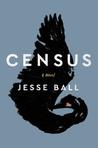
Census by Jesse Ball
My rating: 5 of 5 stars
Ever since reading The Early Deaths of Lubeck, Brennan, Harp and Carr, I’ve been a bit mystified by Jesse Ball. How are his worlds so dreamlike, yet so sharp and well-defined? There’s never any mystery what things look like. And yet you’d never be able to say what historical period or country the stories take place in. (An exception to this is How To Set a Fire and Why.)
In the introduction to Census, he tells us that he grew up with a brother, who’s no longer alive. The brother had a learning disability of some kind. Ball expected to spend his life taking care of his brother, but that ended up not happening. Census is a kind of tribute to this brother.
It’s also a writing manual, in a way. A key to Ball’s strategy. I’m only guessing, of course. But knowing this about his early family life does seem to shine some light on his writing. As a young person, he must have become good at communicating with learning disabled people. This is how he’s able to write with such simplicity, and yet still reach the deepest emotional places. I’ll bet his books are very accessible to neurodivergent people. And I imagine they’re also easy to translate into other languages.
Maybe his brother is the true, invisible audience to his novels. I have absolutely no grounds to make that claim at all. Maybe I’m too sentimental.
I suppose, as somebody who values the ability to simplify language, I’m almost jealous of him. What better training as a writer than to grow up with a beloved, learning disabled brother?
Or maybe put it this way: if you imagined that you were writing to somebody who was distracted, or learning disabled, or perhaps not a native English speaker, or stressed out, wouldn’t that help your writing? You’d take as much of the burden of communication onto yourself as you possible could. You’d impose as little mental effort on your reader as you could. That’s one way of respecting them.
There are other ways of respecting your reader. But that’s one of them.
Of course it’s very complicated. Census does a fantastic job of communicating the nuances of these relationships.
One thing I particularly like is the tattooing. The protagonist, as part of the census, goes around tattooing people. It’s reminiscent of Kafka’s In the Penal Colony. But there’s a difference. Where, in In the Penal Colony, the state inscribes itself on bodies with an inhuman attitude and an ill-defined, transcendent purpose, in Census the protagonist carries out the state’s self-inscription with tenderness and a kind of ironic or absurdist detachment from any ostensible purpose it might serve. It’s as though the protagonist is aware of the criticism In the Penal Colony embodies and has accepted it. Yet he doesn’t fight the state, or flee from it, but accepts it as absurd, and then accepts his own absurdity as well.
It’s very interesting, and I’ll be chewing on it for a long time. There are insights there that diligent study will expose.
View all my reviews